
Walking Retraining
Improving walking quality, endurance and confidence through repetitive practice and task-specific exercises.
CONDITIONS WE SUPPORT
We see adults after stroke at home or in our Ashmore clinic. At your first visit, we assess how you move and discuss which everyday activities you want to work on.
01 / STROKE
A stroke can change the way a person moves, thinks, communicates and participates in everyday life. While every stroke is different, many people are left with challenges that affect their independence long after leaving hospital.
At Equip Rehabilitation, we provide neurological physiotherapy for adults living with stroke across the Gold Coast. Whether your stroke occurred a few weeks ago or many years ago, our goal is to help you maximise your recovery, improve your mobility and regain confidence through evidence-based rehabilitation.
We understand that recovery doesn't end when formal inpatient rehabilitation finishes. Many people continue to make meaningful improvements months and even years after their stroke when rehabilitation remains targeted, progressive and consistent.
Let’s discuss your goals and rehabilitation options.
02 / STROKE
A stroke occurs when part of the brain is damaged because its blood supply has been interrupted.
There are two main types of stroke:
Ischaemic stroke, caused by a blockage in a blood vessel supplying the brain.
Haemorrhagic stroke, caused by bleeding into or around the brain.
The symptoms experienced depend on which area of the brain has been affected. Every person's recovery is unique, with some experiencing relatively minor changes while others require ongoing rehabilitation to regain mobility and independence.
Stroke is a medical emergency. If you notice sudden weakness, facial drooping, difficulty speaking, vision changes or loss of balance, call an ambulance immediately. Early treatment can significantly improve outcomes.
03 / STROKE
Stroke can affect almost every aspect of daily life. Common symptoms include:
Not everyone experiences the same combination of symptoms. Rehabilitation is most effective when it is tailored to the individual's goals, abilities and lifestyle.
Let’s discuss your goals and rehabilitation options.
04 / STROKE
The brain can adapt after stroke through neuroplasticity. Rehabilitation uses repeated, meaningful practice to support movement and everyday skills. Recovery varies between people, and assessment helps identify suitable goals and strategies.
Physiotherapy aims to encourage this process through repetitive, task-specific practice that challenges the nervous system in a meaningful way.
At Equip Rehabilitation, we focus on helping people improve the activities that matter most to them. This might include walking independently around the home, returning to golf, climbing stairs, getting back into the community or simply feeling safer and more confident during everyday tasks.
Research consistently shows that rehabilitation should remain active, challenging and progressive. Improvements are often still possible many months or years after a stroke when therapy is appropriately targeted.
05 / STROKE
Treatment may include:
No two rehabilitation programs are the same.
Your physiotherapist will complete a comprehensive assessment before developing an individualised program based on your goals, current abilities and the stage of your recovery.
Improving walking quality, endurance and confidence through repetitive practice and task-specific exercises.
Reducing falls risk while improving stability during standing, walking and everyday activities.
Building strength throughout the body to improve mobility, transfers and overall physical capacity.
Improving shoulder movement, arm function and hand use through targeted exercises and functional practice where appropriate.
Practising real-life activities such as getting out of a chair, negotiating stairs, carrying objects or returning to recreational activities.
Improving endurance and overall health through individually prescribed aerobic exercise.
Identifying factors contributing to falls and developing practical strategies to improve safety both at home and within the community.
Providing structured exercise programs that can be completed independently or with support workers to maximise progress between appointments.
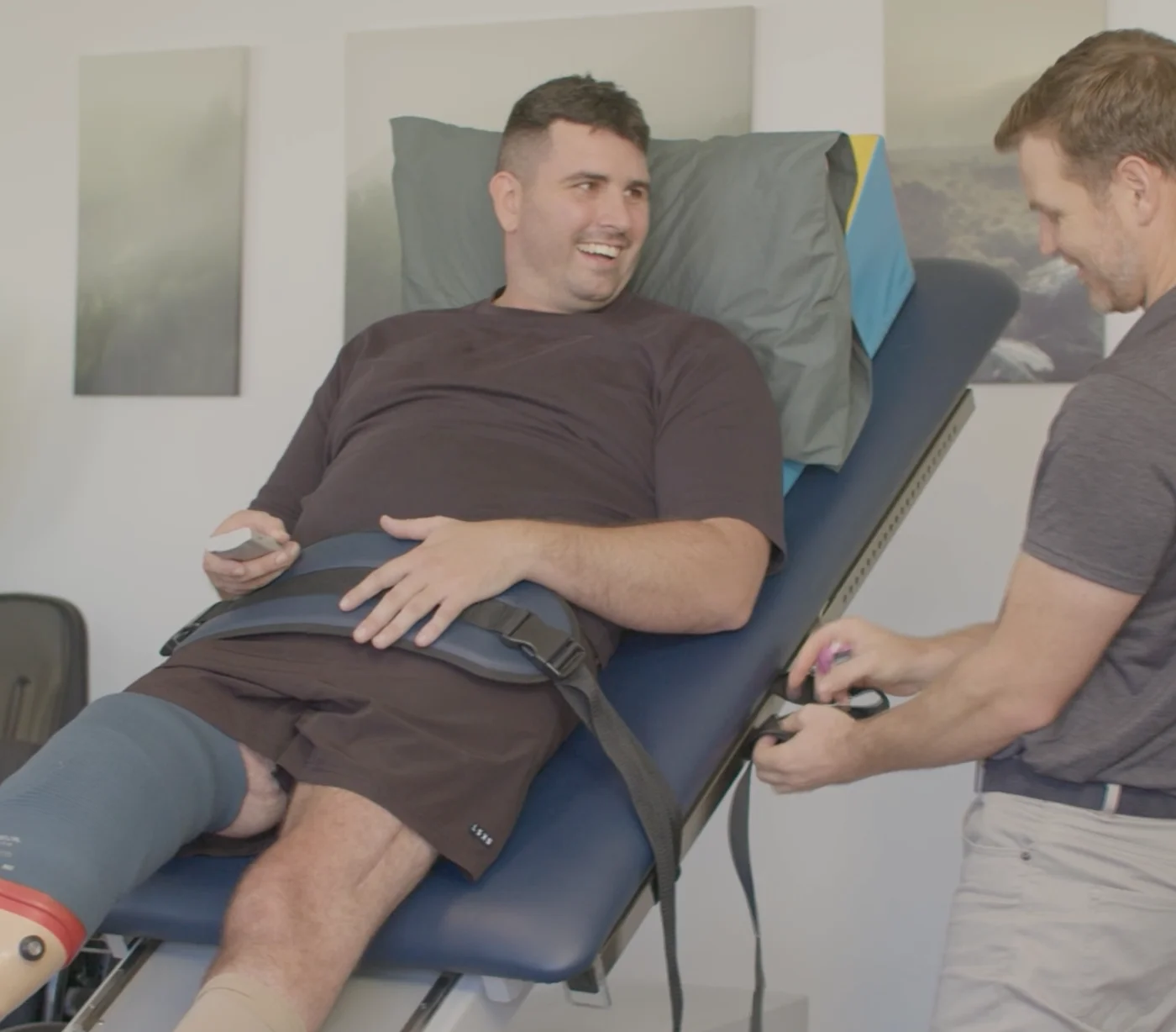
06 / STROKE
Recovery doesn't only happen in the clinic.
Equip Rehabilitation provides neurological physiotherapy:
This allows therapy to occur where it is most meaningful. For some people this means practising stairs at home. For others it means improving confidence walking through a shopping centre, returning to the golf course or participating in gym-based strength training.
Our approach is always guided by what is most likely to improve your independence and quality of life.
07 / STROKE
Neurological rehabilitation is central to our practice.
Our physiotherapists have extensive experience working with adults living with stroke and other neurological conditions across hospital, community and private practice settings.
We believe rehabilitation should be purposeful, measurable and centred around meaningful goals.
Rather than simply prescribing exercises, we work alongside participants, families and support teams to develop rehabilitation programs that become part of everyday life.
We regularly collaborate with:
This collaborative approach helps ensure everyone involved is working towards the same goals.
08 / STROKE
Yes. Although recovery is often fastest in the first few months, research shows meaningful improvements can still occur years after stroke through appropriately prescribed neurological rehabilitation.
You can contact Equip directly to discuss an appointment. Your funding arrangement may require a referral, service agreement or other documentation; our team can explain what is needed. Where medical assessment or surgical instructions are needed, we will discuss these with you before treatment.
Yes. Many participants benefit from rehabilitation in their own home where therapy can focus on everyday activities and the environments they use most.
Yes. Depending on your goals and mobility, rehabilitation can be completed in our neurological rehabilitation gym, at home or through a combination of both.
This depends on your goals, current function and available funding. Following assessment, your physiotherapist will recommend a frequency that provides the greatest opportunity for meaningful progress.
09 / STROKE
Every stroke is different, and every rehabilitation journey is unique.
Whether your goal is walking further, improving your balance, using your arm more effectively or returning to the activities you enjoy, Equip Rehabilitation can help you work towards those goals through evidence-based neurological physiotherapy.
If you'd like to learn more about our stroke rehabilitation services, contact our team to discuss how we can support your recovery.
These resources provide background information. Your rehabilitation plan depends on your assessment, goals and treating team’s recommendations.
Explore home physiotherapy visits, gym rehabilitation and Ashmore clinic appointments.
Contact our team to discuss service suitability, availability, funding arrangements and any referral information needed for your circumstances.
Get in touchGOLD COAST APPOINTMENTS & REFERRALS
Contact Equip directly to discuss physiotherapy at our Ashmore clinic, home visits across the Gold Coast or gym rehabilitation. Tell us your suburb, movement goals and preferred appointment setting so we can confirm suitability and current availability.
GPs, treating teams and support coordinators can make a physiotherapy referral with the person's consent. Include rehabilitation goals, relevant medical information and funding arrangements. Your funding may require a referral, service agreement or other documentation.
For NDIS-funded physiotherapy, Equip accepts self-managed and plan-managed participants only. We are not NDIS-registered and cannot claim NDIA-managed (agency-managed) funding. Read about NDIS physiotherapy and getting started.
Discuss appointments and availabilityLET’S TALK ABOUT YOUR GOALS
Tell us what matters to you. We’ll help you explore the right rehabilitation options.