
Walking Rehabilitation
Task-specific gait retraining to improve walking quality, endurance, efficiency and confidence for people with incomplete spinal cord injuries.
CONDITIONS WE SUPPORT
Spinal cord injury physiotherapy at home or in our Ashmore clinic, focused on your mobility, transfers, strength and everyday goals.
01 / SPINAL CORD INJURY
A spinal cord injury (SCI) can have a profound impact on movement, strength, sensation and independence. Every injury is unique, and the rehabilitation journey looks different for every individual.
At Equip Rehabilitation, we provide neurological physiotherapy for adults living with spinal cord injuries across the Gold Coast. Whether your injury is recent or occurred many years ago, our focus is helping you maximise your independence, improve your physical capacity and participate in the activities that matter most to you.
We recognise that rehabilitation doesn't end when inpatient therapy finishes. With the right approach, meaningful improvements in mobility, strength, fitness and function can continue well beyond the initial stages of recovery.
Let’s discuss your goals and rehabilitation options.
02 / SPINAL CORD INJURY
A spinal cord injury occurs when damage to the spinal cord interrupts communication between the brain and the body.
This damage may occur following trauma, such as a motor vehicle accident, sporting injury or fall, or from non-traumatic causes including tumours, infection or vascular conditions.
The level and severity of the injury determine how movement, sensation and body function are affected.
Spinal cord injuries are generally classified as:
Complete injuries are classified by the absence of sensory and motor function in the lowest sacral segments (S4–S5), assessed using an established neurological examination.
Incomplete injuries have some preserved sensory or motor function in these lowest sacral segments. Your treating team can explain your classification and what it means for rehabilitation.
Every spinal cord injury presents differently, and rehabilitation should always be tailored to the individual's goals, strengths and potential for recovery.
03 / SPINAL CORD INJURY
People living with a spinal cord injury may experience:
Many people also experience changes in work, recreation, family roles and overall quality of life following injury.
Let’s discuss your goals and rehabilitation options.
04 / SPINAL CORD INJURY
Physiotherapy plays an important role throughout every stage of spinal cord injury rehabilitation.
Whether your goal is walking further, improving wheelchair mobility, increasing strength or maintaining your physical health, rehabilitation aims to maximise your independence while reducing secondary complications.
At Equip Rehabilitation, we use evidence-based neurological rehabilitation principles to develop programs that are challenging, goal-directed and meaningful.
Treatment focuses on improving physical capacity while helping people participate more confidently in everyday life.
05 / SPINAL CORD INJURY
Every rehabilitation program begins with a comprehensive assessment and discussion about your goals.
Your treatment may include:
Task-specific gait retraining to improve walking quality, endurance, efficiency and confidence for people with incomplete spinal cord injuries.
Progressive resistance training to improve muscle strength, functional performance and overall physical capacity.
Exercises designed to improve sitting and standing balance while reducing falls risk.
Practising everyday activities such as transfers, stairs, floor recovery, vehicle transfers and community mobility.
Developing efficient wheelchair mobility while minimising shoulder strain and improving independence.
Improving fitness through individually prescribed aerobic exercise to support both neurological recovery and long-term health.
For people with cervical spinal cord injuries, treatment may include exercises to improve shoulder stability, arm function and hand use where appropriate.
Individualised exercise programs designed to complement physiotherapy sessions and encourage ongoing progress between appointments.
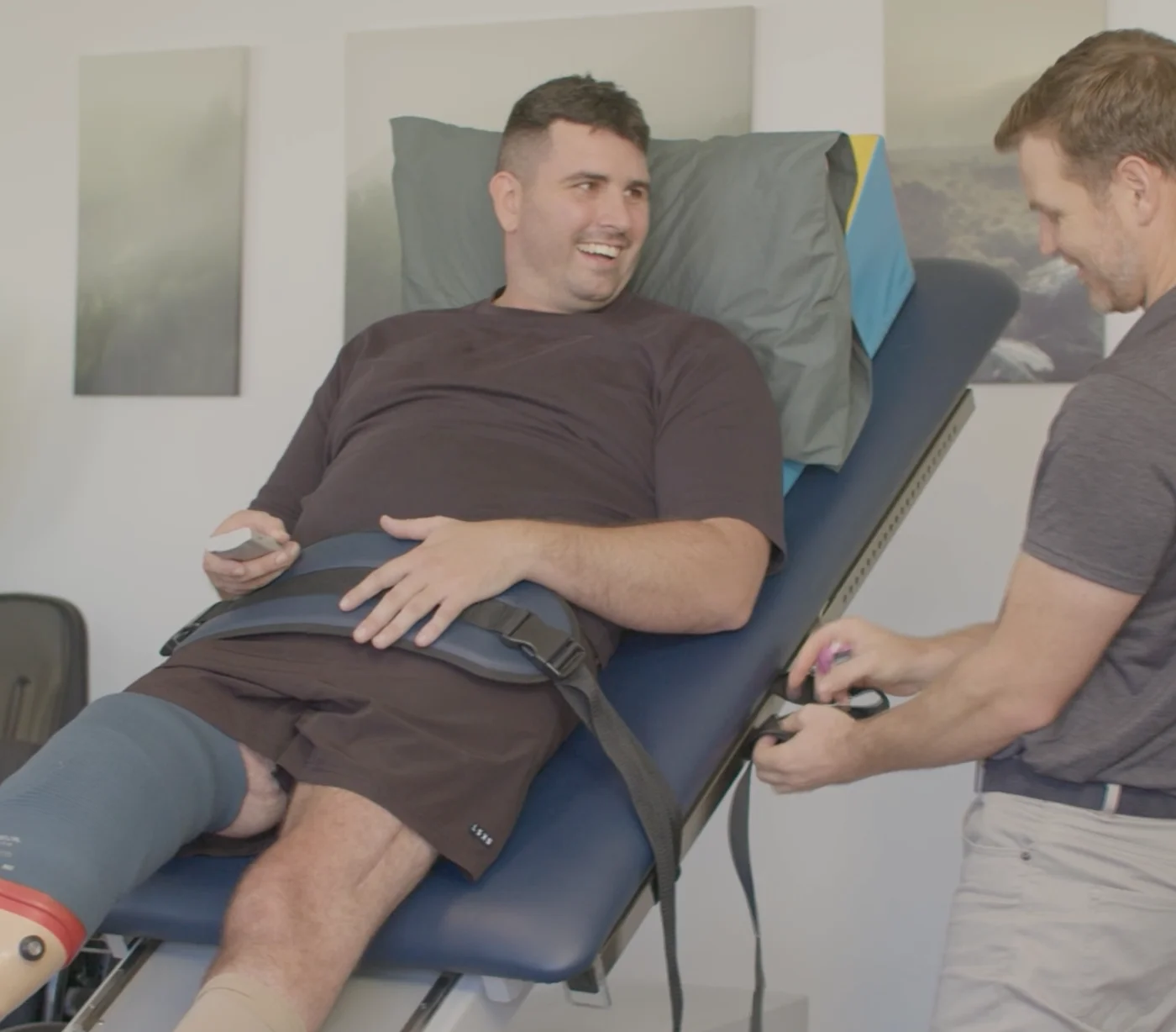
06 / SPINAL CORD INJURY
Many people continue to achieve important functional gains months and years after their injury through consistent rehabilitation and progressive exercise.
Our physiotherapists work alongside participants to build long-term programs that support mobility, strength, cardiovascular fitness and confidence.
Therapy may be delivered:
This flexibility allows rehabilitation to be completed in environments that are meaningful and relevant to your everyday life.
Remaining physically active following a spinal cord injury is important not only for improving function but also for maintaining long-term health.
Physiotherapy can assist in reducing the risk of complications including:
Maintaining physical capacity is an important part of preserving independence over time.
07 / SPINAL CORD INJURY
Neurological rehabilitation is the focus of everything we do.
Our physiotherapists have experience working with adults living with both traumatic and non-traumatic spinal cord injuries across hospital, community and private rehabilitation settings.
We believe rehabilitation should be purposeful, measurable and centred around meaningful goals.
Whether your goal is walking further, returning to work, improving transfers, increasing your fitness or maintaining your independence, your rehabilitation program will be designed around what matters most to you.
We regularly work alongside:
This collaborative approach helps ensure rehabilitation remains coordinated and goal-focused.
08 / SPINAL CORD INJURY
Yes. Many people continue to improve their strength, fitness, mobility and independence long after their initial injury. Rehabilitation should evolve as your goals change over time.
Yes. Every rehabilitation program is individualised regardless of the level or completeness of injury.
Yes. Many people benefit from practising transfers, mobility and everyday activities within their own home environment.
Yes. Our gym provides an ideal environment for progressive strengthening, balance training and task-specific rehabilitation using specialised equipment.
You can contact Equip directly to discuss an appointment. Your funding arrangement may require a referral, service agreement or other documentation; our team can explain what is needed. Where medical assessment or surgical instructions are needed, we will discuss these with you before treatment.
Every spinal cord injury is different, but every person deserves the opportunity to maximise their potential.
Whether your goal is improving mobility, increasing strength, maintaining your physical health or participating more confidently in everyday life, Equip Rehabilitation can help you work towards meaningful outcomes through evidence-based neurological physiotherapy.
Contact our team to learn more about our spinal cord injury rehabilitation services.
These resources provide background information. Your rehabilitation plan depends on your assessment, goals and treating team’s recommendations.
Explore home physiotherapy visits, gym rehabilitation and Ashmore clinic appointments.
Contact our team to discuss service suitability, availability, funding arrangements and any referral information needed for your circumstances.
Get in touchLET’S TALK ABOUT YOUR GOALS
Tell us what matters to you. We’ll help you explore the right rehabilitation options.